
Resources · Blog
Static Eliminators & Web Cleaning, Explained
Application articles on selecting, installing and verifying static-control and cleaning equipment for a production line.

Ionizing-bar application illustration from our technical guide.
The ST-G Ionizing Bar: How to Specify, Mount and Verify an Anti Static Bar
What ±50 V ion balance actually means on your line, why the high voltage is generated inside the bar instead of in a separate box, how to work out the mounting pitch for any bar length, and how to check the bar is doing its job.
Read the ST-G articleExplore by topic
All Blog articles.
Explore equipment selection and application planning in these 30 articles.
30 resources

Blog · Static Control
Ion Transport and Recombination in Static Eliminators
Follow ion generation, transport and recombination, then separate emitter-output claims from ionizer measurements at the working position.
Read the article
Blog · Surface Cleaning
Filter Efficiency vs Bypass Leakage in a Cleaning System
Read filter ratings, installed-system leakage evidence and material-cleaning results separately when evaluating extraction for a dry surface-cleaning line.
Read the article
Blog · Static Control
Charge Relaxation Time: Why It Is Not an Ionizer Decay Time
Interpret charge relaxation time with an isolated-sphere concept diagram and a normalized example. Separate a bulk model from film and ionizer measurements.
Read the article
Blog · Surface Cleaning
Dust Collector Airflow: Read the Installed Operating Point
Read dust-collector airflow with its pressure and operating conditions. Use a conceptual fan/system curve and a blank record for a cleaning-head review.
Read the article
Blog · Static Control
Static Voltage and Capacitance: Same Charge, Different Voltage
See how capacitance changes voltage at fixed charge through an ideal capacitor example, and why the result cannot be used as a direct film-charge calculation.
Read the article
Blog · Surface Cleaning
Compressed Air for Surface Cleaning: Particles, Water and Oil
Review compressed-air purity for a proposed surface-cleaning process: particle, water and oil requirements, pressure dew point and the sampling location.
Read the article
Blog · Static Control
Ionizing Bar Line Speed: Separate Web Width from Travel Time
Calculate web travel time from distance and line speed, distinguish it from transverse bar span, and see why the result does not establish ionizer performance.
Read the article
Blog · Surface Cleaning
Particle Size Distribution in Cleaning Trials: Number vs Volume
Review particle size reports for a cleaning trial with an original sphere example, a comparison table and questions to clarify the reporting basis.
Read the article
Blog · Static Control
Faraday Cup Measurements: Net Charge and Surface Patterns
Explore Faraday cup measurements through two research sources and an original arithmetic example for reviewing a material report before equipment selection.
Read the article
Blog · Surface Cleaning
Surface Roughness and Particle Adhesion: Read the Contact Geometry
Explore particle contact on textured surfaces through two laboratory studies and an original diagram. Apply the distinction to a dry-cleaning material review.
Read the article
Blog · Static Control
Electrostatic Induction Near Film: An Isolated Metal Example
Explore an isolated-metal example beside charged film. Follow an original concept diagram and prepare a focused static-control application discussion.
Read the article
Blog · Surface Cleaning
Air-Jet Particle Removal: Reviewing Supply Settings and Trial Evidence
Review an air-jet cleaning proposal with a three-part comparison and a hypothetical purchasing case. Identify the evidence needed for your material.
Read the article
Blog · Static Control
Triboelectric Series for Plastic Film: Read the Conditions Behind the Ranking
Review a triboelectric chart for a proposed film and roller-cover pairing. Use comparison questions and a hypothetical case to prepare an application discussion.
Read the article
Blog · Surface Cleaning
Airborne Particle Counts vs Surface Cleanliness: What Each Result Describes
Compare a room air report with a film-surface inspection through a hypothetical review case. Identify the open question before discussing a cleaning trial.
Read the article
Blog · Static Control
Ionizer Maintenance Records: Separate Work from Verification
Connect work performed, a separate verification report and a named review decision. Use a proposed record table to make missing evidence visible.
Read the article
Blog · Surface Cleaning
Water-Break Test vs Contact Angle: What About Particle Cleanliness?
Interpret wetting and particle-inspection records separately. Match each reported observation to the cleaning requirement it actually addresses.
Read the article
Blog · Static Control
Relative Humidity and Static on Plastic Film: Read Temperature Too
Read relative humidity with air temperature, film and process context. Distinguish equipment operating limits from test conditions and process acceptance.
Read the article
Blog · Surface Cleaning
Reading a Surface Particle Inspection Report: Count, Area and Size
Interpret particle counts, inspected area, size descriptors and reporting limits. See why different totals can have the same count per unit area.
Read the article
Blog · Static Control
Surface Resistance vs Surface Voltage: Reading Film Test Results
Separate applied test voltage, material resistance and noncontact static readings. Compare the units, methods and conditions in film measurement reports.
Read the article
Blog · Surface Cleaning
Film Cleanliness Before Lamination: Record Stops and Transfers
Link film sections, surface state and handling events after a stop or transfer, with a blank handover log for inspection and restart decisions before lamination.
Read the article
Blog · Static Control
Planning an Ionizing Bar Retrofit: A Pre-Installation Checklist
Prepare the line drawing, material envelope, mounting access, connection questions and verification plan before adding an ionizing bar to an existing machine.
Read the article
Blog · Surface Cleaning
Cleaning Rollers and Adhesive Collection Rolls: Trace the Particle Transfer
Trace particles from the material to the cleaning roller and adhesive collector. Separate transfer checks from downstream contamination with a blank inspection log.
Read the article
Blog · Static Control
Static Returns After Ionization: Trace the Next Contact and Separation
Map readings after ionization, after the next separation and before the affected operation. Includes a diagnostic comparison table and blank observation log.
Read the article
Blog · Surface Cleaning
Preparing Coated Optical Film Samples for a Cleaning Trial
Identify film faces, coatings and protective layers, retain useful comparison samples, and document the starting condition with a sample handover worksheet.
Read the article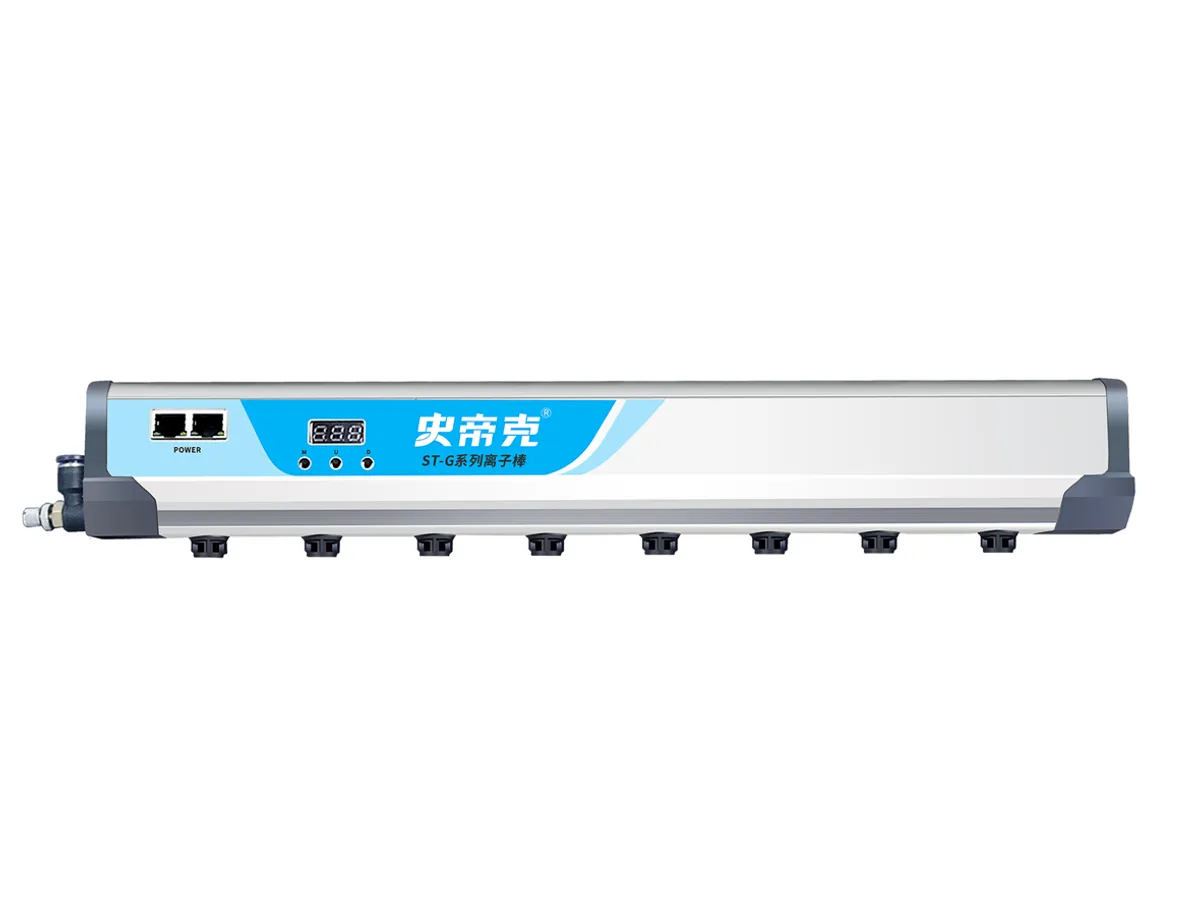
Blog · Static Control
Comparing Ionizer Datasheets: Which Test Conditions Must Match?
Compare decay time and ion balance using endpoints, polarity, test geometry and operating conditions, with a blank supplier comparison worksheet.
Read the article
Blog · Surface Cleaning
Dry PCB Cleaning and Flux Removal: Match the Process to the Contamination
A process-stage decision table for dry particles before paste printing, flux residues after assembly, and the separate checks each cleaning task needs.
Read the article Blog · Static Control
The ST-G Ionizing Bar: How to Specify, Mount and Verify an Anti Static Bar
What ±50 V ion balance actually means on your line, why the high voltage is generated inside the bar instead of in a separate box, how to work out the mounting pitch for any bar length, and how to check the bar is doing its job.
Read the article
Blog · Static Control
Ionizing Bar Selection Guide for Lithium Battery Production
Electrode coating, slitting and winding all generate charge as the web separates from a roller. Which bar suits which step, and where to mount it.
Read the article
Blog · Static Control
Smart Ionizing Bars for Photovoltaic Manufacturing
Cell handling, backsheet lamination and glass loading are all static-critical. How to specify a bar for PV production lines.
Read the article
Blog · Web Cleaning
Optical Film Dust Removal: 9 Steps for High Cleanliness
A step-by-step operating procedure for optical film cleaning, from roller tack selection through static verification.
Read the articleLooking for the fundamentals?
Our Guides explain ionizing bars, static prevention and web-cleaning methods.