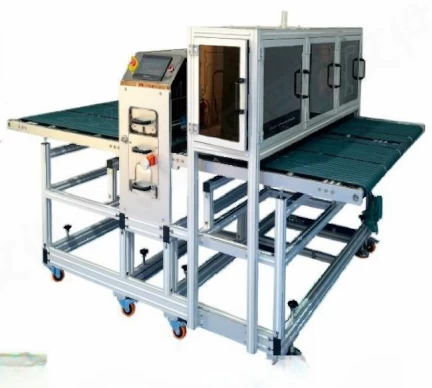
SMT Inline Cleaning Machine (SMT600 Series)
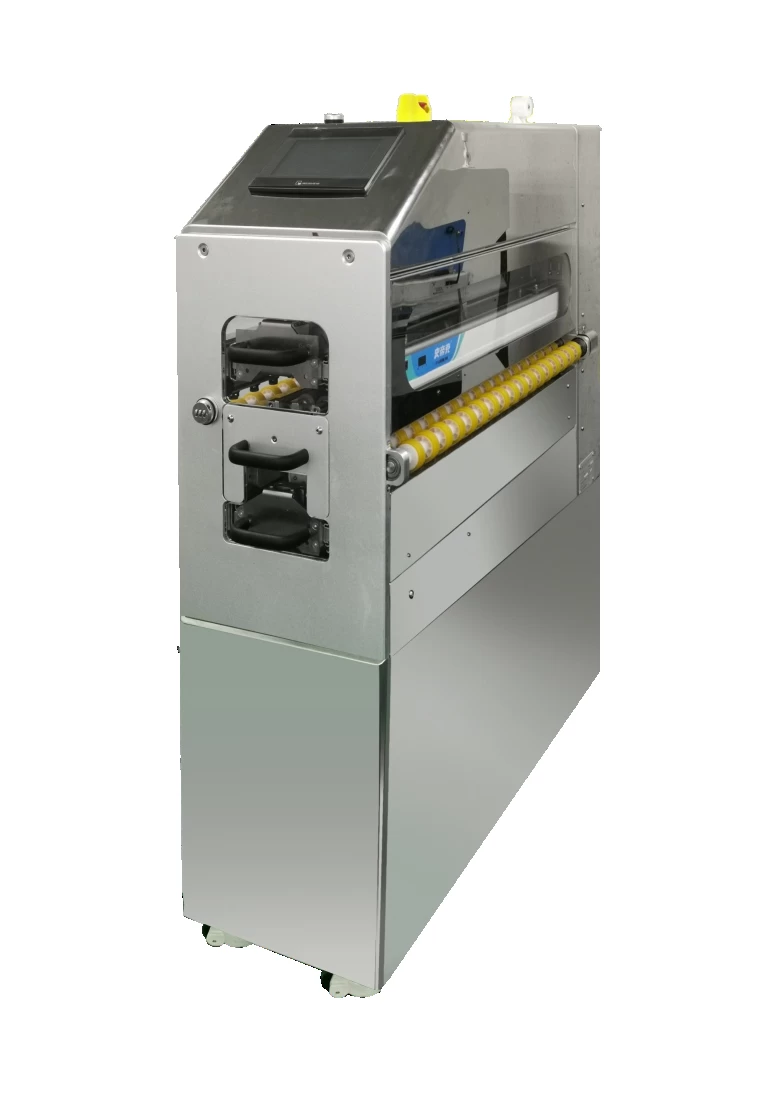
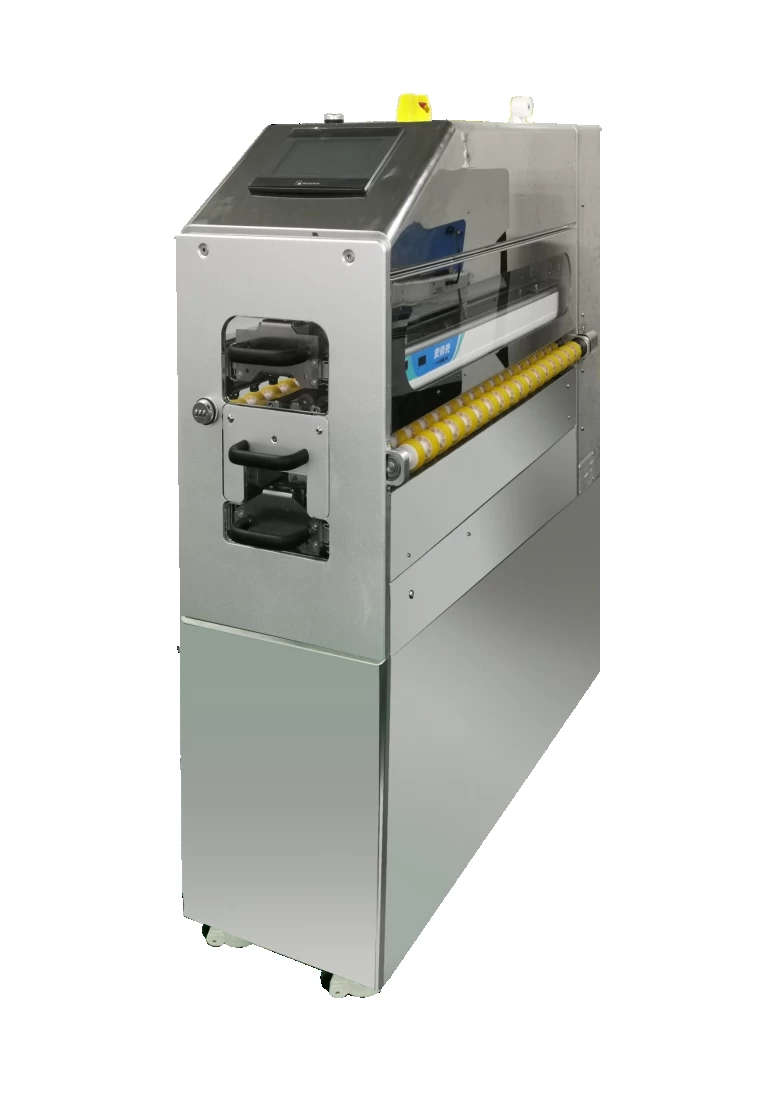
SMT600 Series — inline SMT cleaning machine with upper and lower adhesive rollers, integrated intelligent static elimination, and quick-change window structure for fast maintenance, and a cleaner bare board going into the printer.
Dual-Sided Adhesive Rollers
Upper and lower rollers clean both sides — no fixed mounting required, flexible and quick to operate.
Integrated Static Elimination
Effectively prevents quality defects caused by static charge on SMT substrates.
Quick-Change Structure
Quick-change window design for adhesive roller and paper roll cartridge — easy maintenance.
Product Description
The SMT Inline Cleaning Machine SMT600 Series is developed for SMT production lines where stable surface cleanliness is essential. Upper and lower adhesive rollers clean both sides of substrates simultaneously — with no fixed mounting required for flexible, quick operation.
The thin cleaning layer keeps contact pressure low across copper foil and thin film substrates. Combined with the integrated intelligent static elimination system and quick-change window structure for easy servicing, the SMT600 Series delivers reliable, high-yield cleaning in automated electronics manufacturing environments.
Product Features
- Upper and lower adhesive rollers — no fixed mounting required, flexible and quick to operate
- Thin cleaning layer — low contact pressure across copper foil and thin film substrates
- Special precision adhesive rollers for dry, loose particle removal from the board surface
- Integrated intelligent static elimination system — effectively prevents quality defects caused by static charge
- Adhesive roller shafts and paper roll cartridge with quick-change window structure — easy maintenance and servicing
Technical Advantages
Dual-Sided
Upper and lower rollers provide thorough cleaning of both substrate surfaces in a single pass.
Integrated Static Control
Static elimination runs alongside the cleaning pass to reduce the charge on the board, and with it the electrostatic attraction that pulls particles back to a cleaned surface. How much charge is actually left, and whether dust settles again, are confirmed separately on your own boards at your own line speed and conditions. Neither is guaranteed by the eliminator being fitted.
Easy Maintenance
Quick-change window structure minimizes downtime during roller and paper cartridge replacement.
Technical Specifications
| Model | SMT600 Series |
| Application | SMT Inline Surface Cleaning |
| Cleaning Method | Dual-sided adhesive roller |
| Roller Design | Upper + Lower adhesive rollers |
| Static Elimination | Integrated intelligent static elimination |
| Maintenance | Quick-change window structure |
| Operation Mode | Automatic inline conveyor |
| Control System | Industrial PLC |
| Power Supply | 220V / 50Hz |
Industry Applications
Application Scenarios
Pre-Solder Paste Printing PCB Cleaning
Solder paste printing is one of the most contamination-sensitive steps in SMT assembly. Dust particles on PCB pads prevent solder paste from adhering correctly, causing solder bridging, insufficient solder, or open joints after reflow. The SMT600 Series cleans both surfaces of PCBs inline before they reach the paste printer, ensuring pads are free of contamination at the most critical point in the SMT process.
Continuous High-Volume SMT Line Cleaning
SMT production lines run continuously at high throughput, and any cleaning step that requires manual intervention or causes line stoppages reduces overall equipment effectiveness (OEE). The SMT600 Series is designed as a fully automatic inline machine with industrial PLC control, matching the continuous conveyor speed of the SMT line and eliminating the cleaning step as a production constraint.
Bare Board Cleaning Before Paste Printing
The supported case is a bare board carrying loose, dry particles, cleaned before the solder paste printer. Particles on the copper or the solder mask at that point sit under the stencil and under everything printed on top of them. Positions later in the line are a different problem: the rollers must not contact printed paste, and an already-populated board brings component height, fragility and underside clearance into it — review those separately rather than assuming this machine covers them.
Designed for SMT Line Integration
The SMT600 Series is built specifically for integration into SMT production lines, not as a standalone cleaning station. The industrial PLC control system communicates with line control systems, the automatic inline conveyor matches SMT line speeds, and the dual-sided upper and lower adhesive rollers clean both PCB surfaces simultaneously without a board flip. The quick-change window structure is built so the roller can be replaced without stripping the machine down. How long a changeover actually takes on your line is one of the things to establish at the trial rather than take from a datasheet. For compact line layouts where floor space is limited, compare with the PCB Vertical Cleaning System.
What to send for an inline quotation
An inline cleaner is quoted against the line it goes into, not against a width. Send:
- The board — length, width and thickness, the warp you actually see, any raised features, and whether anything is mounted on the underside.
- Surface and contamination — solder mask or coating, and the particles you are trying to remove.
- The conveyor — working height, direction of travel, which edge is supported, and the takt time the cleaner has to keep up with.
- The interface — the actual handshake and I/O your line uses between machines, named from your own line documentation. We will match what is specified rather than assume a protocol.
- Acceptance — how you will judge the result: particle count, board surface condition, and residual voltage, which are three separate checks.
What to record during the trial itself is set out in how to test and maintain cleaning performance.
Frequently Asked Questions
Where in the SMT line should the SMT600 Series be installed?
Before the solder paste printer, on the bare board. That is the position this machine is built for, and the one to quote against. Any position after printing has to be reviewed on its own terms — the rollers must not contact printed paste, and a populated board raises component height, fragility and underside clearance, none of which this configuration addresses.
Does the SMT600 clean both sides of PCBs simultaneously?
Yes. The SMT600 Series uses dual upper and lower adhesive rollers that clean both PCB surfaces in a single pass as the board travels through the inline conveyor. That removes the board flip and the second pass a single-sided machine needs.
How does the PLC control system integrate with the SMT line?
The industrial PLC communicates with the line's central control system for conveyor speed matching, start/stop synchronization, and alarm management. Contact us with your line control system specifications for integration requirements.
What PCB sizes does the SMT600 Series support?
PCB size compatibility is specified during machine configuration. Provide your minimum and maximum board dimensions and conveyor width requirements at the quotation stage for a correctly configured machine.
How often does the adhesive roller need to be replaced?
Roller replacement frequency depends on production volume, PCB surface condition, and the level of contamination being removed. The quick-change window structure is designed for fast roller access, minimizing the time taken for scheduled roller changes. Typical replacement intervals are provided based on your production specification.
Is the SMT600 Series suitable for both leaded and lead-free SMT processes?
Yes. The adhesive roller removes loose surface particles from a bare board, and that does not change between a leaded and a lead-free line. It is a dry process, so it introduces no water or chemistry of its own. It is not a flux-residue or ionic-contamination clean, and it does not replace one — those need an aqueous or solvent process.
Polarizer Precision Cleaning Machine

FPC 4-Axis High Precision Cleaning Machine
FPC 8-Axis Advanced Cleaning Machine

Large Size Optical Film Cleaning Machine
LCM Module Industrial Cleaning Machine
PCB Surface Cleaning Machine
PCB Vertical Cleaning System
Roll Chip Universal Cleaning Machine
Backlight Panel Cleaning Machine
CCL Cleaning Machine ST DT1340