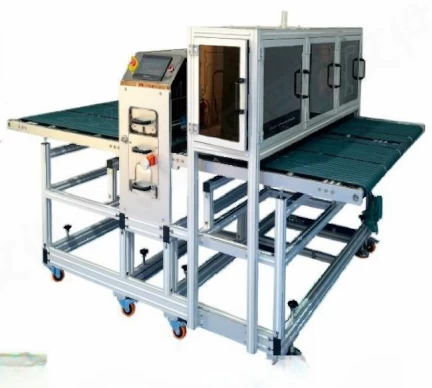
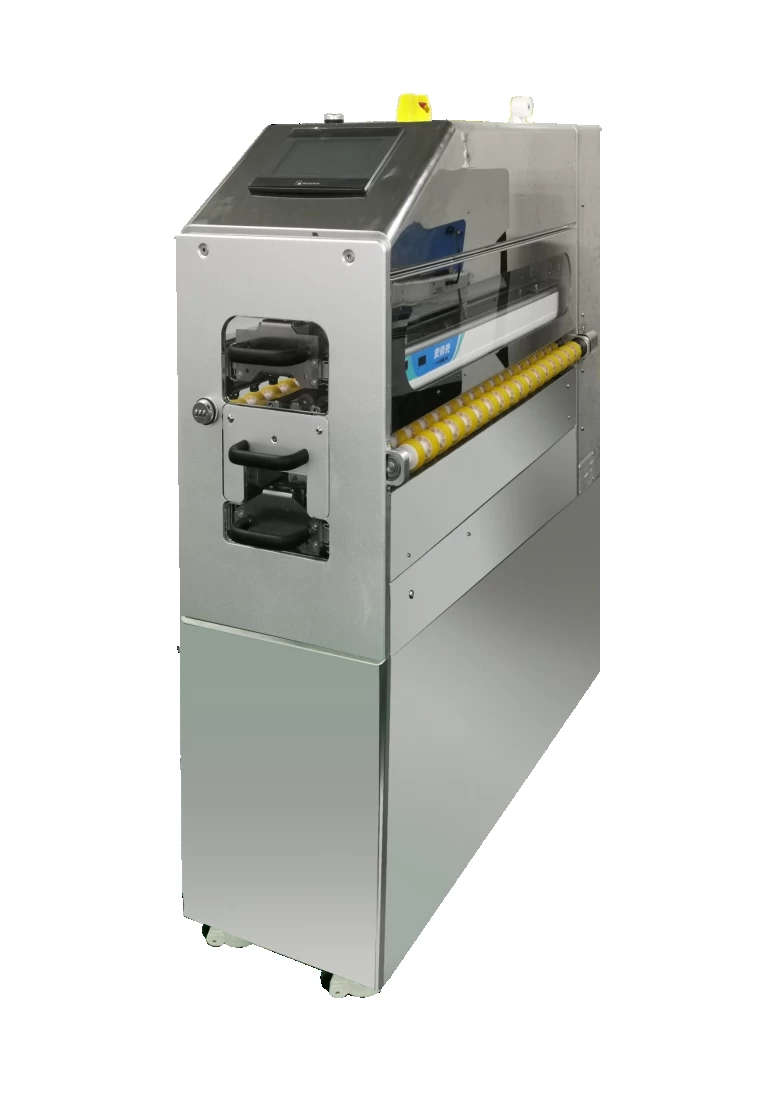
Large Size Optical Film Cleaning Machine
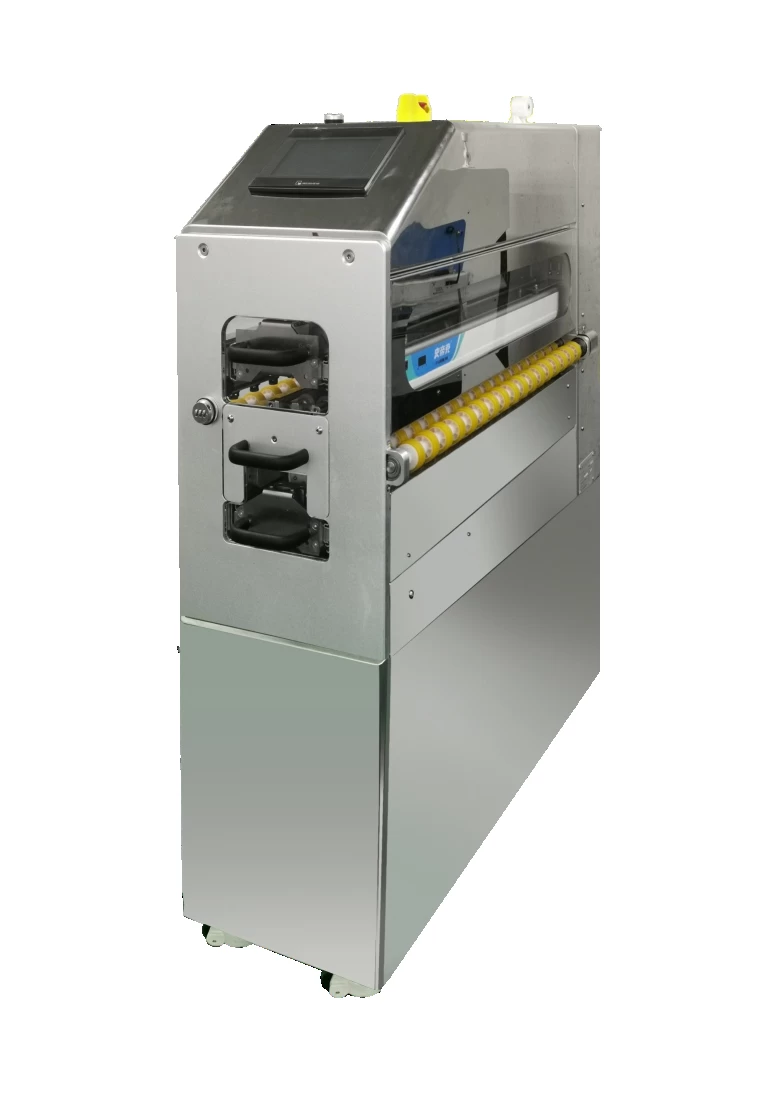
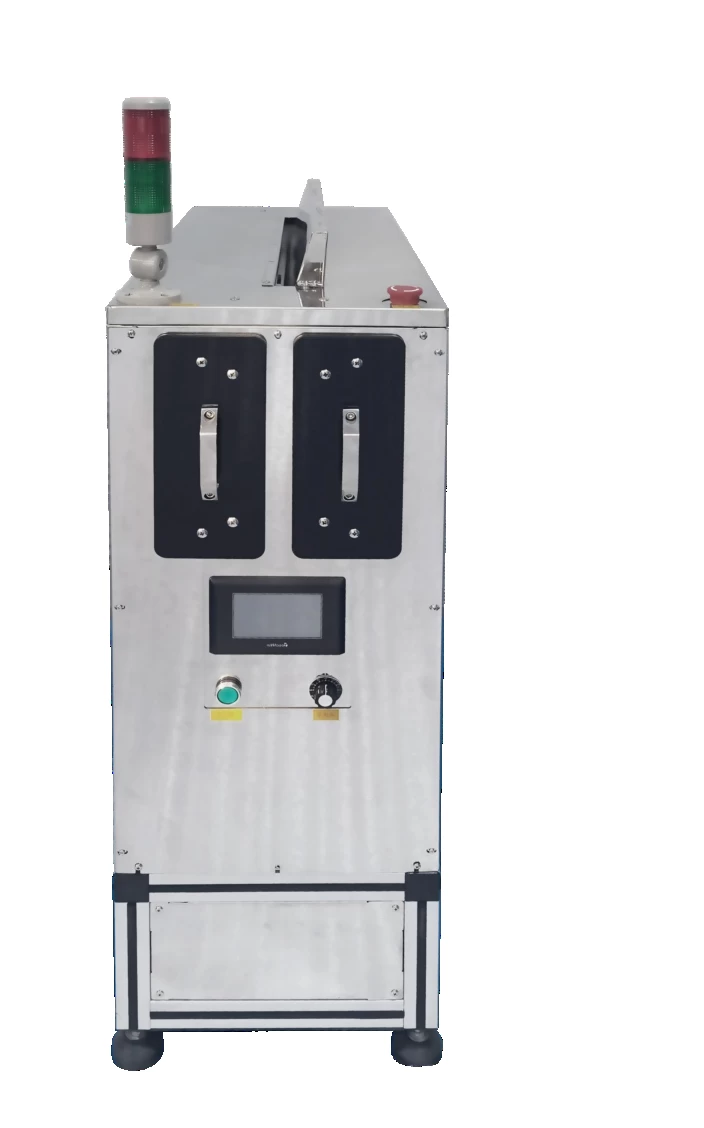
STFK Series (STFK338 / STFK448 / STFK738 / STFK948) — large size optical film cleaning machine with magnetic levitation drive, precision adhesive rollers, and integrated intelligent static elimination for display and optical film manufacturing.
Multiple Width Options
Available in 338mm, 448mm, 738mm, and 948mm cleaning widths for various film sizes.
Magnetic Levitation Drive
Smooth, stable transport designed to keep handling loads off coated film surfaces.
Integrated Static Elimination
Removes static charge from optical film surfaces to prevent contamination defects.
Product Description
The Large Size Optical Film Cleaning Machine STFK Series is designed for cleaning optical films, diffuser sheets, prism sheets, polarizers, and other large-format display materials. Available in four width configurations (STFK338, STFK448, STFK738, STFK948), the series covers a wide range of film sizes used in display and optical manufacturing.
The all-new magnetic levitation drive is designed for smooth, stable transport, and the thin cleaning layer keeps contact pressure low across delicate optical film. Special precision adhesive cleaning rollers deliver high efficiency cleaning that improves optical film yield rate, while the integrated intelligent static eliminator removes static charge from film surfaces.
Product Features
- All-new magnetic levitation drive design — smooth, stable operation
- Thin cleaning layer — low contact pressure across optical film materials
- Special precision adhesive cleaning rollers — high efficiency cleaning, improves optical film yield rate
- Integrated intelligent static elimination — removes static charge from optical film surfaces
Technical Advantages
Multiple Widths
Four model variants cover 338mm to 948mm optical film widths for display manufacturing.
Low Contact Pressure
A magnetic levitation transport and a thin cleaning layer keep contact pressure low. Whether a particular coating or protective film tolerates that contact is established on your own sample.
Integrated Static Control
An intelligent static eliminator runs alongside the cleaning pass to reduce the charge on the film, and with it the electrostatic attraction that pulls particles back to a cleaned surface. How much charge is actually left, and whether dust settles again, are confirmed separately on your own material at your own line speed and conditions. Neither is guaranteed by the eliminator being fitted.
Technical Specifications
| Model Series | STFK338 / STFK448 / STFK738 / STFK948 |
| Application | Large size optical film surface cleaning |
| Drive System | Magnetic Levitation |
| Cleaning Method | Adhesive roller |
| Material Compatibility | Optical films, diffuser sheets, prism sheets, polarizers |
| Static Elimination | Integrated intelligent static eliminator |
| Available Widths | 338mm / 448mm / 738mm / 948mm |
| Power Supply | 220V / 50Hz |
Industry Applications
Application Scenarios
Large-Format Display Film Manufacturing
Optical films for large displays — 32-inch, 55-inch, and larger — present a serious cleaning challenge because conventional cleaning equipment cannot cover the full film width in a single pass without seaming artifacts. The STFK series is available in widths from 338mm to 948mm, with each model providing full-width cleaning that eliminates the need for multi-pass cleaning and the seam defects it causes.
Diffuser, Prism, and Polarizer Film Preparation
Optical films including diffuser sheets, brightness enhancement films (BEF), and polarizers must be free of particles before lamination into a display module. A single particle trapped between film layers creates a visible hotspot or dark spot defect in the finished display. The STFK Series removes particles across the full film width before the lamination stage, protecting display quality from the film manufacturing side.
Optical Coating Pre-Treatment
Anti-reflection, anti-glare, and hard-coat optical films require a perfectly clean substrate surface before the coating process. Surface particles cause coating voids and adhesion failures that reduce the effectiveness of the coating and create visible defects. The STFK Series removes loose surface particles ahead of the coating step. What counts as clean enough for your coating is set by your own acceptance criterion and confirmed on a sample.
Choosing the Right STFK Model Width
The STFK series is available in four cleaning widths: 338mm, 448mm, 738mm, and 948mm. Select the model whose cleaning width equals or exceeds your maximum film width. Using a model narrower than your film requires multiple passes, which risks alignment errors and seam artifacts. Contact us if your film width falls between standard model sizes — custom widths are available on request. For polarizer film applications requiring precision grade cleaning, see our dedicated Polarizer Precision Cleaning Machine. For the procedure itself — the order the steps go in and what each one is for — see optical film dust removal in nine steps.
What to Send for a Film Trial
Optical film is where a cleaner is accepted or rejected on the surface, not on the particle count, so the trial has to record both. Send with the sample:
- Which face is which — coated side, protective film, adhesive side — and which of them the cleaner may touch at all.
- The contamination you are trying to remove, with the particle size range that matters to your process.
- Your film thickness and width, and the line speed you need.
Judge the result as three separate checks, not one: particle count before and after; the film surface itself, inspected for marks, gloss change or coating lift; and residual surface voltage, measured with a static field meter against the limit your own process sets. A pass on particles with a mark on the coating is not a pass.
The general method — how to classify a cleaner, and what to record during a trial — is set out in how to test and maintain cleaning performance.
Frequently Asked Questions
What film types can the STFK Series clean?
The STFK Series handles optical films including diffuser sheets, prism sheets (BEF), polarizer films, TAC films, protective films, and other optical substrates used in LCD and display manufacturing. Whether a given film tolerates roller contact depends on its coating, the roller tack and the transport pressure, so the tack is graded to the film and confirmed on a sample before a production roll is committed.
What cleaning widths are available?
The STFK Series is available in four standard widths: 338mm, 448mm, 738mm, and 948mm. Custom widths are available on request for non-standard film dimensions.
Does the cleaning process damage optical film coatings?
Not by design. The adhesive roller lifts particles through controlled contact, with no abrasives, solvents or UV exposure, and the transport uses a magnetic levitation drive. Whether a particular film tolerates that contact still depends on its coating and the roller tack, so the tack is graded to the film and confirmed on a sample before a production roll is committed.
Can the machine handle very thin optical films?
Yes. The transport and cleaning pressure systems are designed for thin, flexible optical film materials, and the transport uses a magnetic levitation drive. The thinnest gauge a given film runs at is confirmed on a sample.
Does the STFK Series include static elimination?
Yes. Integrated intelligent static elimination is included, neutralizing electrostatic charge on film surfaces simultaneously with particle removal. This is essential for optical films, which are highly susceptible to electrostatic particle re-attraction.
What is the difference between the optical film cleaner and the polarizer cleaner?
The STFK optical film cleaner is optimized for large-format film cleaning across widths up to 948mm. The polarizer precision cleaner (ST-F7x40 series) is configured specifically for polarizer film dimensions and pre-lamination precision cleaning. If you clean both film types, they are typically handled by separate dedicated machines for each process stage.
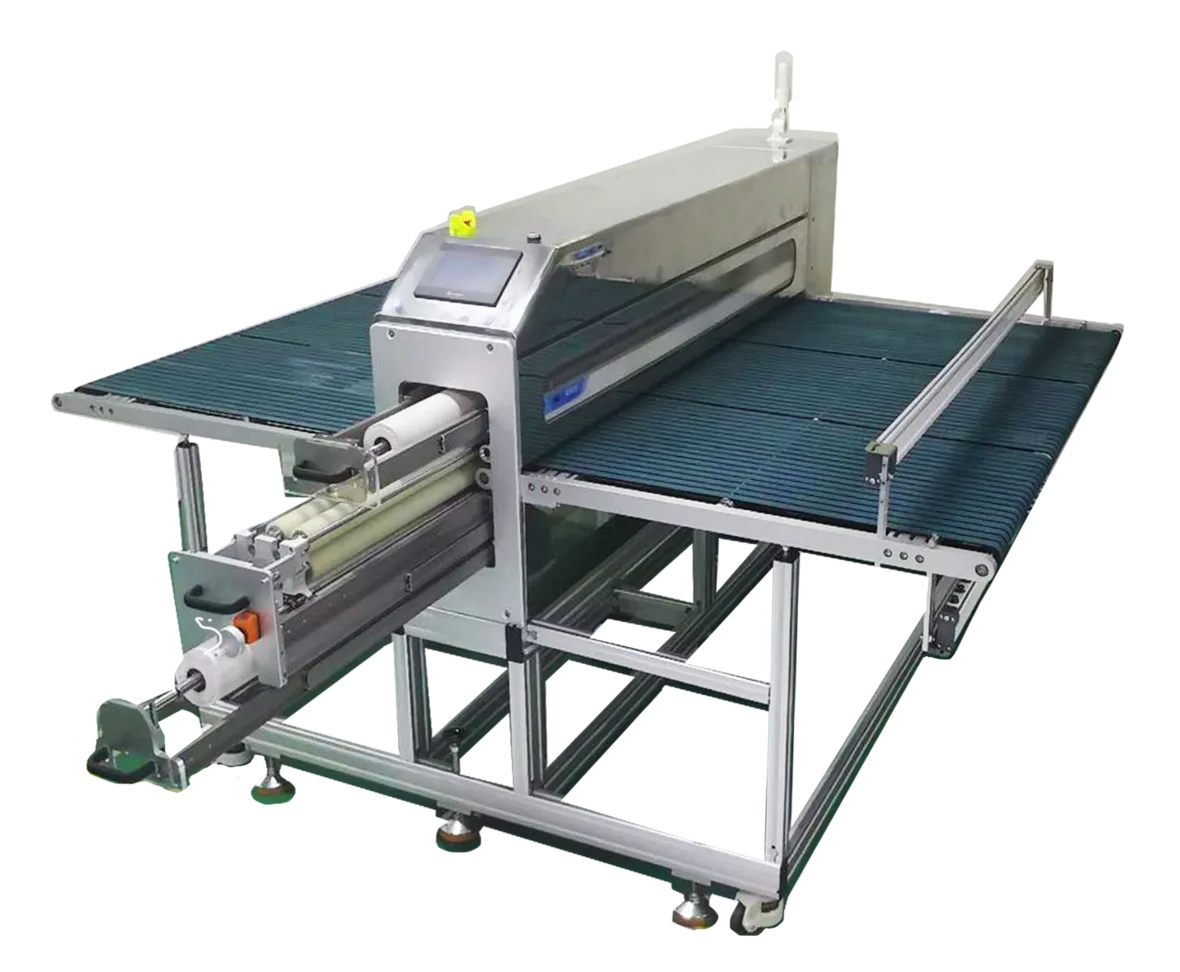
Polarizer Precision Cleaning Machine

FPC 4-Axis High Precision Cleaning Machine
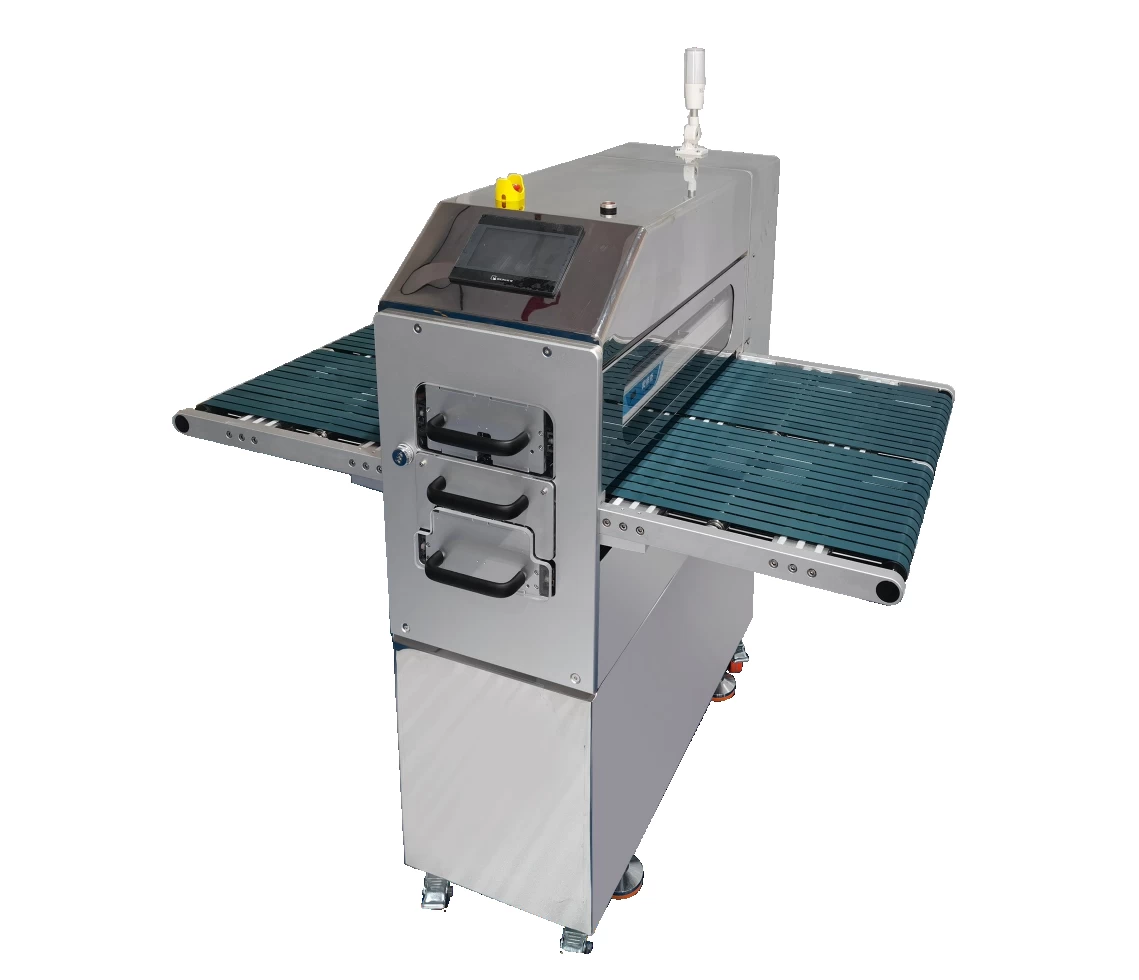
FPC 8-Axis Advanced Cleaning Machine
Large Size Optical Film Cleaning Machine
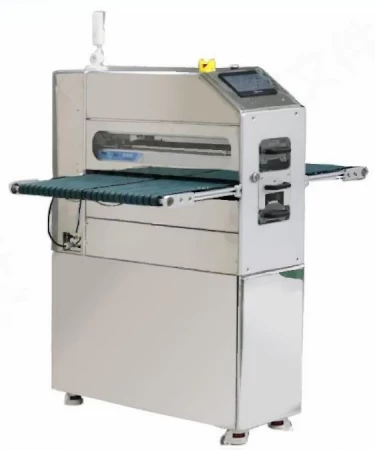
LCM Module Industrial Cleaning Machine
PCB Surface Cleaning Machine
PCB Vertical Cleaning System
Roll Chip Universal Cleaning Machine

SMT Inline Cleaning Machine (SMT600 Series)
Backlight Panel Cleaning Machine
CCL Cleaning Machine ST DT1340