PRODUCT DETAILS
Professional Industrial Solutions
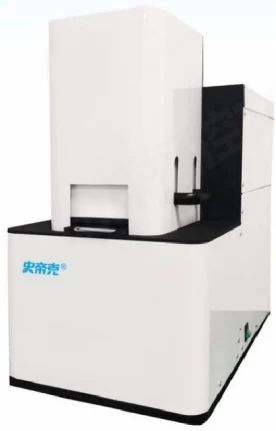
Polarizer Absorption Axis Angle Measuring Instrument
Customized automation equipment designed to improve efficiency, process stability, and production consistency.
Efficient Operation
Helps streamline production and reduce manual workload.
Stable Performance
Built for reliable and continuous industrial use.
Custom Support
Can be adapted to specific production requirements.
Product Description
This automation equipment is developed for industrial production applications requiring higher efficiency, process control, and stable product quality.
It can be widely used in customized manufacturing lines, assembly processes, inspection stations, and other automation scenarios.
Product Features
- Improves production efficiency and consistency
- Reduces manual intervention and operating errors
- Supports continuous industrial operation
- Suitable for customized automation solutions
- Designed for integration into existing production lines
Technical Advantages
Efficient
Improves workflow efficiency and reduces repetitive manual operations.
Flexible
Can be adjusted or customized according to different project needs.
Reliable
Stable structure and dependable performance for industrial applications.
Technical Specifications
| Voltage | Customized |
| Power | Customized |
| Application | Industrial Automation |
| Control Mode | Automatic / Semi-automatic |
| Structure | Customized |
| Installation | Production Line / Workstation |
| Material | Industrial Grade Components |
| Dimensions | Customized |
Industry Applications
Application Scenarios
Polarizer Absorption Axis Quality Control in Display Manufacturing
Polarizer films must be laminated to LCD glass panels at a precise angular alignment — typically 0° or 90° relative to the display axis. Errors in polarizer angle cause light leakage, contrast reduction, and color non-uniformity visible in the finished display. The Polarizer Absorption Axis Angle Measuring Instrument quantifies the actual absorption axis angle of each polarizer film before or after lamination, providing the measurement data needed to accept, reject, or correct angle deviations.
Incoming Inspection of Polarizer Film Stock
Polarizer film rolls from suppliers carry a specified absorption axis angle, but production variation means individual sheets or roll sections can deviate from the nominal. Using the measuring instrument for incoming inspection identifies out-of-specification material before it enters the production line, preventing polarizer angle defects from propagating to finished displays where they are far more costly to detect and correct.
Process Monitoring and Alignment Verification
During display assembly process development or when setting up a new production line, precise measurement of the polarizer absorption axis angle at key process stages identifies alignment errors in the lamination equipment or handling fixtures. This measurement capability supports process engineering teams in achieving and maintaining the angular accuracy required for high-contrast, uniform display performance.
Why Absorption Axis Angle Measurement Matters
A polarizer absorption axis angular error of as little as 1–2 degrees causes measurable light leakage in a crossed-polarizer display configuration, reducing the contrast ratio and affecting color accuracy. At 5 degrees of error, the defect becomes visible to the end user as non-uniform brightness. Accurate measurement before assembly provides the data needed to prevent these defects from reaching finished products. Contact us to discuss measurement range, angular resolution, and integration with your production line inspection workflow.
Frequently Asked Questions
What does the Polarizer Absorption Axis Angle Measuring Instrument measure?
The instrument measures the angular orientation of a polarizer film's absorption axis — the direction in which the polarizer blocks light — relative to a reference direction. This measurement is critical in display manufacturing because polarizers must be laminated at precise angles for correct display performance.
Why is polarizer angle accuracy important in LCD manufacturing?
In a liquid crystal display, the front and rear polarizers must be oriented at precisely defined angles (typically crossed at 90°) relative to the liquid crystal layer. Angular errors cause light leakage, reduced contrast ratio, and color non-uniformity that degrade display quality and may be visible to the end user.
What angular resolution does the instrument provide?
Measurement range and angular resolution are customized to the application requirement. Contact us with your specification — typical requirements for display polarizer inspection range from 0.01° to 0.1° resolution depending on the tightness of the process control requirement.
Can the instrument be integrated into an automated production line?
Yes. The instrument can be configured for automatic or semi-automatic operation and integrated into production line inspection workflows. Control mode and data output interface are specified based on your line integration requirements.
Does the instrument measure both incoming film and laminated panels?
The measurement configuration depends on whether you are measuring film stock (before lamination) or laminated panels (after lamination). Contact us with your measurement stage requirement and we will advise on the appropriate configuration.
What is the process for ordering this instrument?
Contact us with your polarizer film dimensions, required measurement range and resolution, throughput requirement, and any production line integration needs. We provide a specification proposal and quotation based on your application requirements.