Part 1: Understanding the Basics
What does a polarizer cleaning machine actually do?
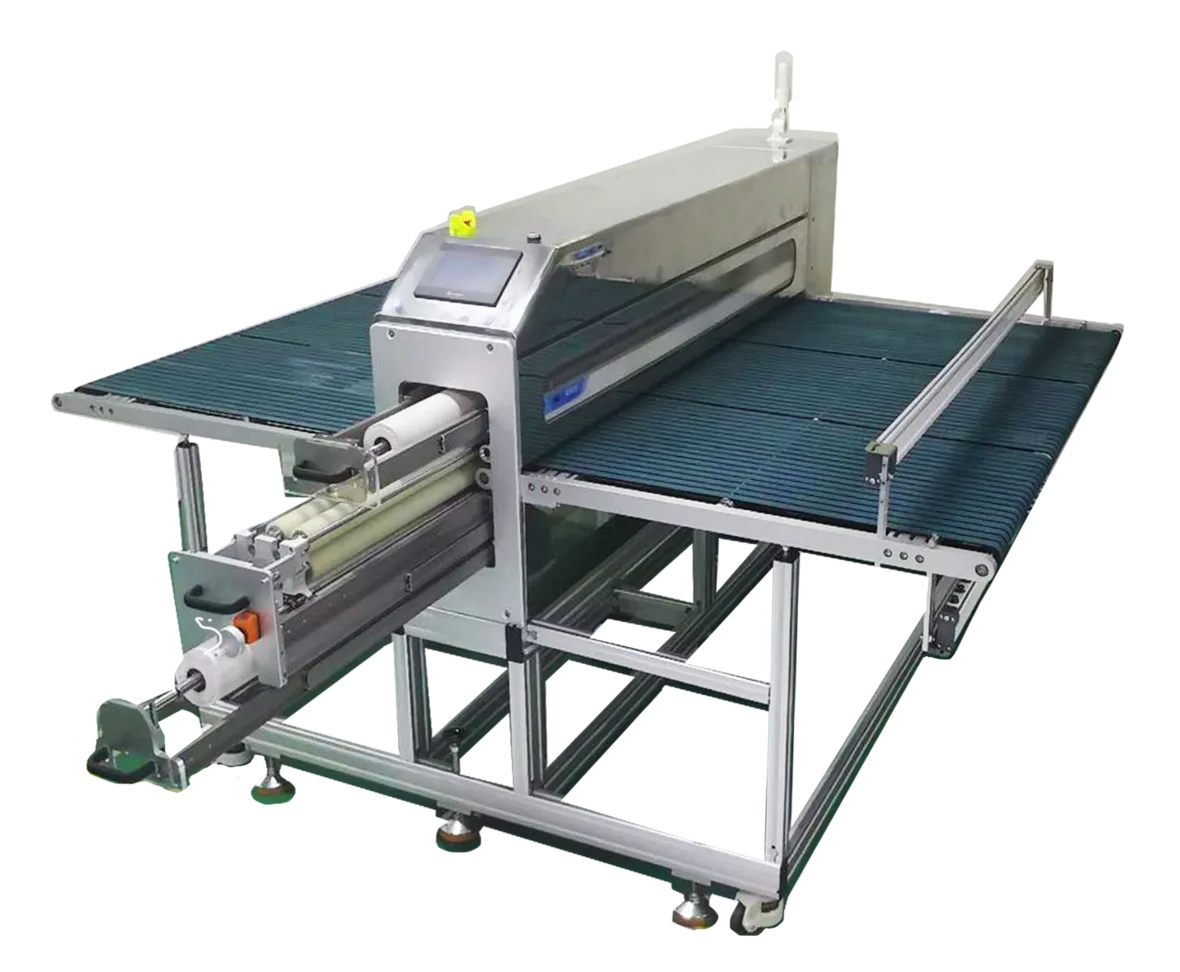
A polarizer cleaning machine removes surface contamination — dust particles, fibers, static-attracted micro-debris — from polarizer film before it enters the lamination or bonding stage of display manufacturing. The process combines two mechanisms: static charge neutralization via an ionizing bar, and physical particle removal via tacky silicone rollers backed by peelable adhesive paper rolls.
In a properly configured system, the ionizing bar fires first, collapsing the electrostatic field that holds microscopic particles to the film surface. Once the charge is neutralized, the tack rollers lift particles cleanly without dragging them across the surface. This sequential logic — neutralize, then lift — is what separates a proper cleaning system from a simple dust roller that just moves contamination around.
What are the main machine types and which scenarios do they fit?
The market broadly divides into four equipment categories, each designed for a different production context:
- Standard polarizer cleaner: Handles flat, rigid-spec film in conventional TFT-LCD lamination environments. Suitable for stable, high-volume lines running consistent material specifications.
- High-warp polarizer cleaner: Equipped with adaptive pressure structures and wider infeed gaps to accommodate film that deforms or curls under environmental conditions. Essential for lines processing large-format or thin film with warp values exceeding 2 mm.
- OLED-compatible cleaner: Optimized for ultra-thin, flexible substrates where conventional roller pressure would cause coating damage or micro-deformation. Requires precision pressure control and coating-safe roller materials.
- AOI inline cleaner: Designed for inline integration immediately upstream of automated optical inspection stations, where surface cleanliness directly determines false-positive defect rates and AOI throughput.
Why do high-end factories pay a premium for cleaner selection?
In a high-volume display factory running at 95%+ equipment utilization, a cleaning machine that drops yield by 0.5% compounds into millions of dollars of annual scrap. Premium buyers are not paying for branding — they are paying for mechanical consistency across shifts, verified material compatibility with their specific film specs, and the ability to maintain performance over a 3–5 year equipment lifecycle without drift.
The total cost of ownership calculation changes completely when you factor in consumable consumption rates, cleaning yield stability, and the cost of downtime during roller changes or maintenance. A machine that costs 20% more upfront but runs 15% longer between consumable changes and holds tighter yield is almost always the better financial decision.
Why is static control so critical in polarizer cleaning?
Polarizer film is one of the most electrostatically active substrates in display manufacturing. Its composite structure — TAC films, PVA polarizing layer, pressure-sensitive adhesive, release liner — generates and retains charge aggressively during handling and transport. A surface charge of even 1,000–3,000 V is sufficient to attract particles from the surrounding air faster than tack rolling can remove them.
Effective static elimination before tack rolling is therefore not optional — it is the enabling step. Without it, you are chasing a moving target. The ionizing bar must cover the full width of the film with uniform ion density, and its output should be verified periodically with a static field meter. Target: surface charge ≤ 100 V post-ionization.
How should consumable selection factor into machine evaluation?
The tack roller and adhesive paper roll together determine cleaning quality more than any other variable at steady-state. When evaluating machines, ask suppliers for documented consumable consumption rates per 10,000 sheets at standard throughput. A roller rated for 500,000 sheets versus one rated for 300,000 sheets represents a significant operational cost difference over a two-year period.
Also verify that replacement consumables are standardized and available through multiple supply channels — not proprietary items that lock you into a single-source arrangement. Consumable supply risk is underestimated in most procurement processes.
Part 2: Technical Selection Criteria
What are the key mechanical parameters to evaluate?
Five parameters dominate the technical comparison between machines:
- Adaptive pressure structure: The roller pressure mechanism must compensate for film thickness variation within a batch. Fixed-pressure systems fail on mixed or variable-spec material. Look for pneumatic pressure control with real-time feedback, capable of holding pressure within ±0.01 MPa across the roller width.
- Static suppression performance: Ionizing bar output should be rated for the full film width with no dead zones. Verify ion balance and discharge uniformity, not just peak voltage. Balanced ionization (equal positive and negative ion output) is what actually neutralizes charge — unbalanced systems can worsen the problem at the film edges.
- Cleaning efficiency rating: Expressed as particle removal rate at a stated particle size (typically ≥ 0.5 μm) and transport speed. Demand third-party or in-house test data, not marketing claims. A credible machine should achieve ≥ 99% removal of particles ≥ 1 μm at rated speed.
- Material compatibility: The roller compound must be non-reactive with the film's PSA layer and surface coatings. Silicone rollers are standard, but durometer hardness matters — too soft and the roller deforms under pressure; too hard and it damages delicate coatings. The correct range for most polarizer applications is Shore A 20–40.
- Operational stability: Ask for MTBF (mean time between failures) data and review it against your planned maintenance schedule. A machine with a 2,000-hour MTBF running two shifts is down every 6 weeks — manageable. The same MTBF on a three-shift line means a failure roughly every 4 weeks, which is a scheduling problem.
What makes a machine truly OLED-compatible?
OLED polarizer film — particularly in flexible or foldable display applications — is substantially thinner and more mechanically sensitive than conventional LCD film. Standard roller pressures that work perfectly on 0.3 mm TAC-based film will cause micro-deformation in 0.05–0.1 mm flexible substrates, creating yield loss that may not be visible until AOI or end-of-line testing.
Genuine OLED compatibility requires: verified low-pressure roller operation (typically < 0.1 MPa for film thinner than 0.1 mm), roller materials that do not interact with organic functional layers or fluorine-based coatings, and transport mechanisms that do not flex the film laterally during transit through the cleaning zone. Ask for documented test results on your specific substrate — not just a claim that the machine "supports OLED."
What are the key indicators for AOI inline integration?
When a cleaning machine feeds directly into an AOI station, its performance affects inspection accuracy, not just yield. The critical indicators shift slightly:
- Residual particle count: The number of particles ≥ 0.3 μm remaining on the surface post-cleaning determines the AOI false-positive rate. Quantify this, do not estimate it.
- Cycle time matching: The cleaning machine must be capable of throughput rates that match or slightly exceed the AOI station's rated inspection speed to avoid becoming a bottleneck.
- Output consistency: Sheet-to-sheet variation in cleanliness must be controlled — a machine that achieves 99.5% average removal with high variance is more problematic for AOI than one that achieves 99.0% consistently.
- Mechanical handoff: The outfeed conveyor must deliver sheets to the AOI infeed in a controlled, repeatable orientation without introducing new contamination through the transfer mechanism itself.
How do ultra-thin film requirements change the selection calculus?
Film thinner than 0.1 mm — common in notebook panel and smartphone display supply chains — introduces failure modes that do not exist at standard thicknesses. Edge curling under ionizing airflow, substrate distortion under even light roller pressure, and electrostatic discharge damage to surface coatings all become active risks.
For ultra-thin applications, prioritize machines with enclosed ionization zones (to control airflow direction and velocity), soft-touch roller configurations, and active tension control on the transport mechanism. The infeed and outfeed gap settings become critical — a gap 0.5 mm too narrow for a 0.08 mm film creates enough friction to scratch the surface at the entry point.
How should maintenance cost factor into the total cost evaluation?
Procurement teams consistently underweight maintenance cost in capital equipment decisions. For a polarizer cleaning machine, maintenance cost over a 3-year period typically includes: consumable spend (tack rollers, paper rolls, ionizing bar replacement elements), scheduled preventive maintenance labor, unscheduled repair events, and any line downtime attributable to machine unavailability.
Request a full 3-year cost-of-ownership model from shortlisted suppliers. Specifically ask for consumable consumption rates per shift, PM interval recommendations, and typical repair part lead times. A machine priced 15% higher with a significantly lower consumable consumption rate and faster local service response may be the lower-cost option over a 36-month horizon.
Part 3: Production Line Fit
How do I select the right machine for a high-warp production line?
High-warp lines — typically processing large-format film (> 400 mm width) or thin film under thermal cycling conditions — require machines with wider infeed gaps, higher-travel adaptive pressure heads, and transport mechanisms that can handle edge lift without jamming. The specification to request is maximum handleable warp value, expressed in mm of deviation across the film width.
A common mistake is selecting a standard machine and simply widening the infeed gap — this accommodates the physical entry of warped film but does not address the pressure inconsistency that results when a warped sheet passes under a fixed-pressure roller. The roller contacts the raised center while the edges receive little to no cleaning pressure, creating a characteristic "missed edge" contamination pattern that appears on downstream AOI.
DGSDK's high-warp polarizer cleaner addresses this with a floating roller head that follows the film surface profile, maintaining consistent contact pressure regardless of warp geometry.
What does proper installation and commissioning actually involve?
A polarizer cleaning machine installed correctly but commissioned poorly performs like a poorly installed machine. Commissioning is where the equipment is matched to your specific production conditions — not just powered on and handed over.
Proper commissioning includes: parameter setting for your specific film specs (thickness, width, warp range, surface coating type), static elimination verification across the full film width using a calibrated static field meter, cleaning yield verification across a minimum of 200 sheets at production throughput speed, and operator training on daily inspection, parameter adjustment, and consumable replacement procedures.
Any supplier who offers commissioning as a two-hour walkthrough is not actually commissioning the machine — they are demonstrating that it powers on. Expect and require a full-day commissioning process, documented with sign-off data.
How does a multi-SKU production environment affect machine selection?
Lines that run multiple polarizer specifications — different thicknesses, widths, or surface coating types across shifts — require machines with fast, reliable parameter changeover capability. The critical metric is time-to-first-good-sheet after a specification change: the interval between switching film SKU and achieving verified cleaning yield on the new material.
Machines with HMI-stored recipe systems allow operators to recall pre-validated parameter sets for each SKU rather than re-dialing settings manually. This reduces changeover time from 20–30 minutes to 3–5 minutes and eliminates parameter transcription errors. For facilities running 4+ SKUs per shift, recipe-based changeover is a functional requirement, not a convenience feature.
What verification methods should I use to validate cleaning performance?
Cleaning performance should be verified at three stages: acceptance testing before installation, commissioning validation after installation, and periodic in-process monitoring during production.
The verification toolkit includes: particle counting via laser particle counter (baseline the incoming film first, then compare post-cleaning counts), static charge measurement via fieldmeter before and after the ionizing zone, and visual inspection under high-intensity collimated light at 45° angle (which reveals particles and surface artifacts invisible under overhead lighting). For AOI-integrated lines, the AOI station itself becomes the de facto particle counter — track false-positive rates over time as a proxy for cleaning consistency.
What integration requirements exist for upstream and downstream equipment?
A polarizer cleaning machine does not operate in isolation — it sits in a process flow that includes upstream material handling (film unstacking, orientation, pre-inspection) and downstream operations (lamination, bonding, or AOI). Integration failures at the interfaces are a common source of re-contamination that undermines cleaning performance.
Key integration checkpoints: the outfeed conveyor surface must not generate particulates or static. Handoff timing between the cleaner and downstream equipment must be synchronized to avoid sheet queuing (which allows re-contamination while sheets wait). And the cleanroom airflow pattern around the machine must be verified — a machine positioned in a zone of recirculating airflow will fight a losing battle against incoming particles regardless of its internal performance.
Part 4: Advanced Optimization and Future Considerations
How do I maintain stable long-term cleaning performance?
Equipment performance in the first month after commissioning is not a reliable predictor of 12-month or 36-month performance. Long-term stability requires a formal preventive maintenance program, not reactive repair. The core elements are: roller inspection on a defined interval (not "when problems appear"), ionizing bar balance verification monthly, paper roll consumption tracking to detect early signs of roller wear (increasing paper use indicates the roller is losing adhesion and compensating with more paper contact), and transport mechanism alignment checks quarterly.
Establish a cleaning performance baseline at commissioning — documented particle counts, static charge measurements, and yield figures — and trend against it monthly. Performance drift is gradual and easy to miss without systematic tracking. By the time it is visible in yield data, the underlying cause has usually been developing for weeks.
How can I reduce secondary contamination risk?
Secondary contamination — particles deposited on film after cleaning, before or during downstream operations — is frequently misattributed to cleaning machine failure. Investigate the post-cleaning path before adjusting the machine. Common secondary contamination sources include: worn conveyor belts shedding particles, staff traffic patterns that disturb air near the clean output zone, transfer mechanisms with rough surfaces that contact the film edge, and packaging or staging materials that generate particulates.
A practical approach: particle count the film immediately at the machine output, then again at the downstream process entry point. The delta between the two measurements quantifies the contamination contribution of the inter-process transfer — and often reveals a more impactful intervention than further tuning of the cleaning machine itself.
How should I adjust parameters when switching between different film materials?
Each film material combination — TAC/PVA, COP-based film, ultra-thin flexible substrate — has a different electrostatic charge generation profile, surface hardness, and sensitivity to roller pressure. Parameters that achieve excellent results on one material may cause coating damage or missed cleaning on another.
The practical approach is to treat each material specification as a separate validated recipe. Run a DOE (design of experiments) on new materials: vary roller pressure across 3–4 levels, vary transport speed across 2–3 levels, and measure cleaning yield and surface integrity at each combination. This typically requires 200–400 test sheets but produces a validated operating window that can be locked in as a recipe and recalled reliably at every changeover.
Are there meaningful energy optimization opportunities in cleaning machine operation?
For high-volume lines running multiple shifts, energy consumption is a non-trivial operating cost. The main opportunities are: ionizing bar duty cycling during gaps between sheets (many machines run the bar continuously, which is unnecessary and reduces electrode life), blower speed optimization to match actual cleanroom conditions rather than running at maximum continuously, and transport motor speed control to run at actual throughput requirements rather than maximum rated speed.
Modern cleaning machines with programmable logic controllers can implement these optimizations in software without hardware modification. Quantify the baseline energy consumption at commissioning, then work with the machine supplier to implement duty cycling and speed control where the control architecture supports it.
What are the near-term technology trends in polarizer cleaning?
Three trends are reshaping the equipment landscape at the higher end of the market:
- Smart monitoring and predictive maintenance: Machines equipped with roller wear sensors, real-time particle count feedback loops, and condition-based maintenance triggers rather than time-based PM schedules. Early adopters are seeing 15–25% reductions in unplanned downtime.
- Process integration: Cleaning machine functionality being incorporated into integrated lamination or bonding system modules, reducing the number of inter-process transfers (and therefore secondary contamination opportunities) in the overall process flow.
- Reduced-consumable and eco-optimized designs: Longer-life roller materials, reduced adhesive paper consumption through optimized paper-roller contact geometry, and designs that lower total consumable waste per million sheets cleaned. Driven partly by operating cost pressure and partly by sustainability requirements from major display brand customers.
When evaluating new equipment, ask suppliers directly about their roadmap in each of these areas. A machine purchased today should still be supportable and upgradeable in 2030.
Summary
Selecting the right polarizer cleaning machine is a multi-variable decision that goes well beyond comparing specifications on a datasheet. The machine type must match your substrate characteristics, your production scenario, and your line integration requirements. The technical parameters that matter — adaptive pressure, static suppression performance, material compatibility, and operational stability — must be verified against your actual film specs, not accepted as generic claims.
The total cost of ownership calculation should include consumables, maintenance, and downtime, not just purchase price. And the commissioning process — often undervalued — is where the equipment actually becomes fit for purpose on your specific production line.
"The right cleaning machine is not the most expensive one or the most feature-rich one — it is the one that holds the tightest cleaning yield on your specific film specification, at your required throughput, over the longest maintenance interval. That answer is different for every factory."
Need Help Selecting a Polarizer Cleaning Machine?
DGSDK engineers work directly with production teams to match cleaning machine specifications to substrate, throughput, and line integration requirements. Share your film specs and we will recommend the right configuration.